Hydrographic Printing
General Information
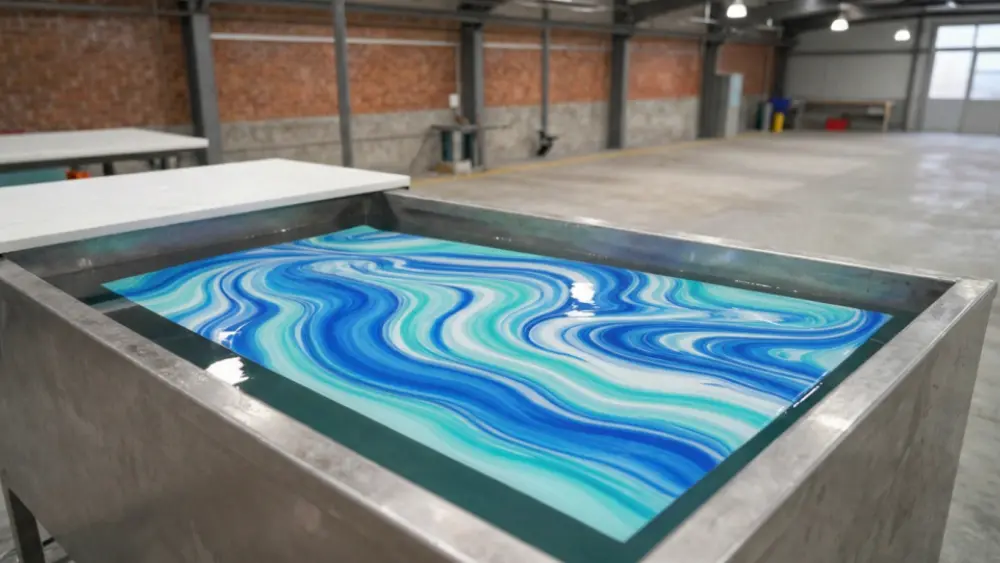
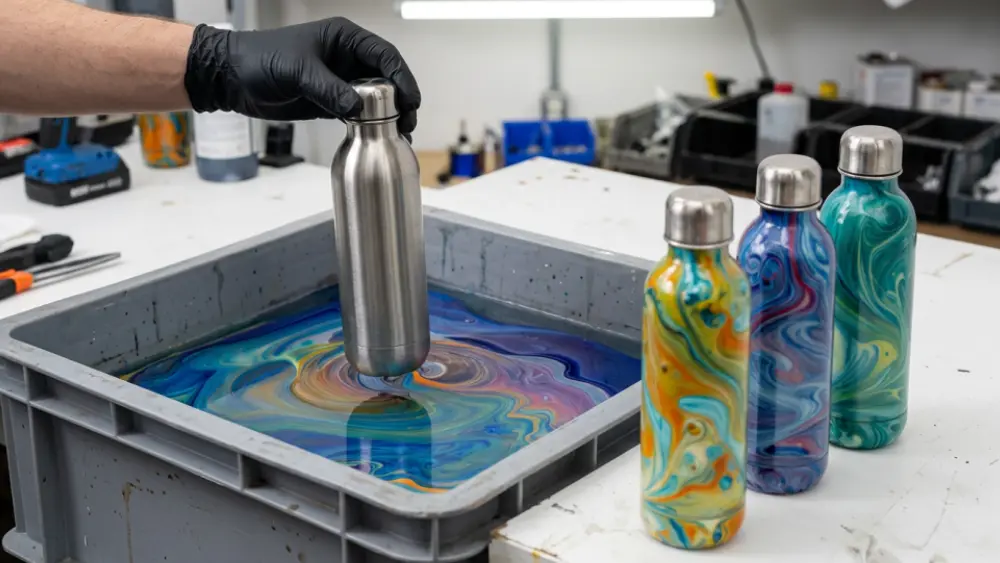
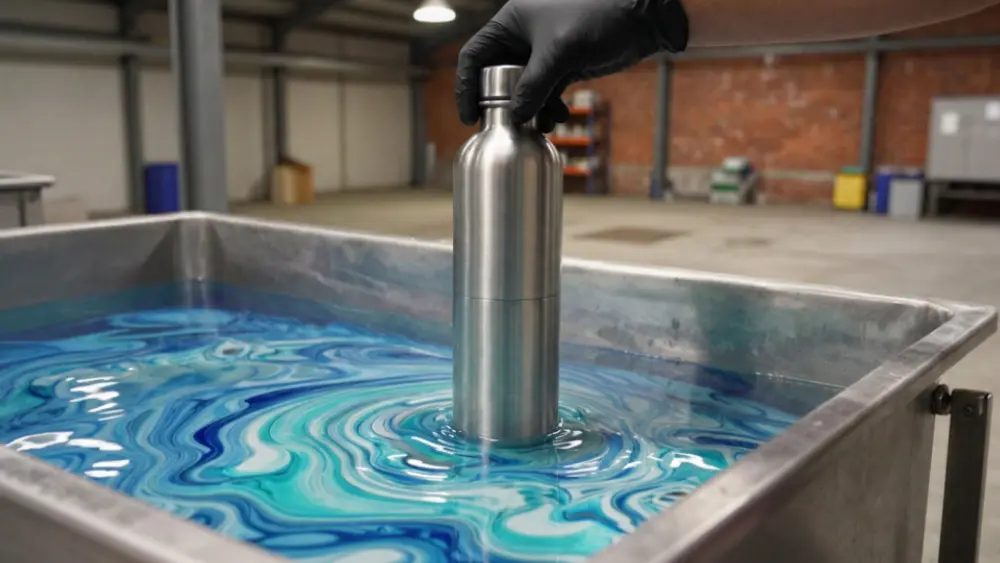
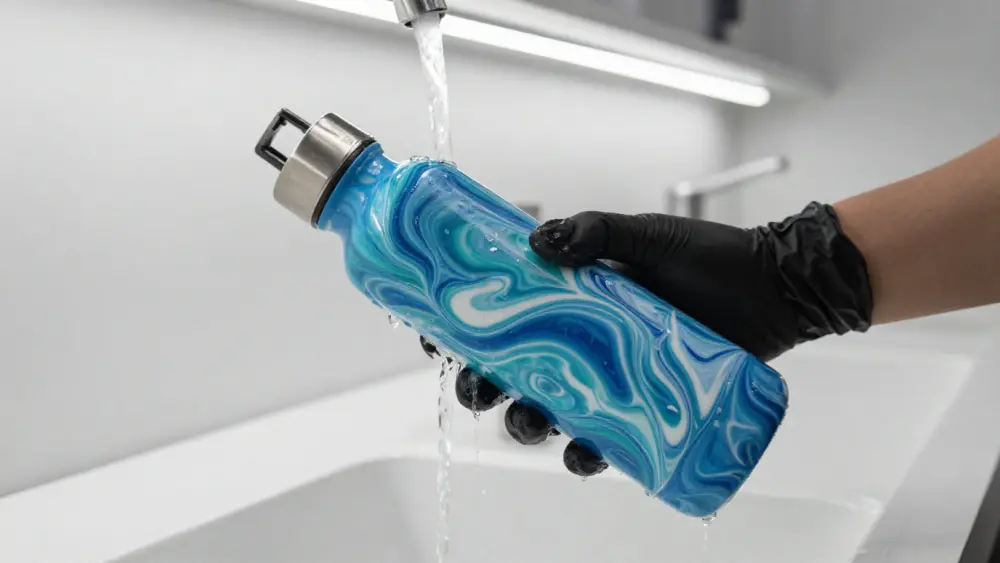
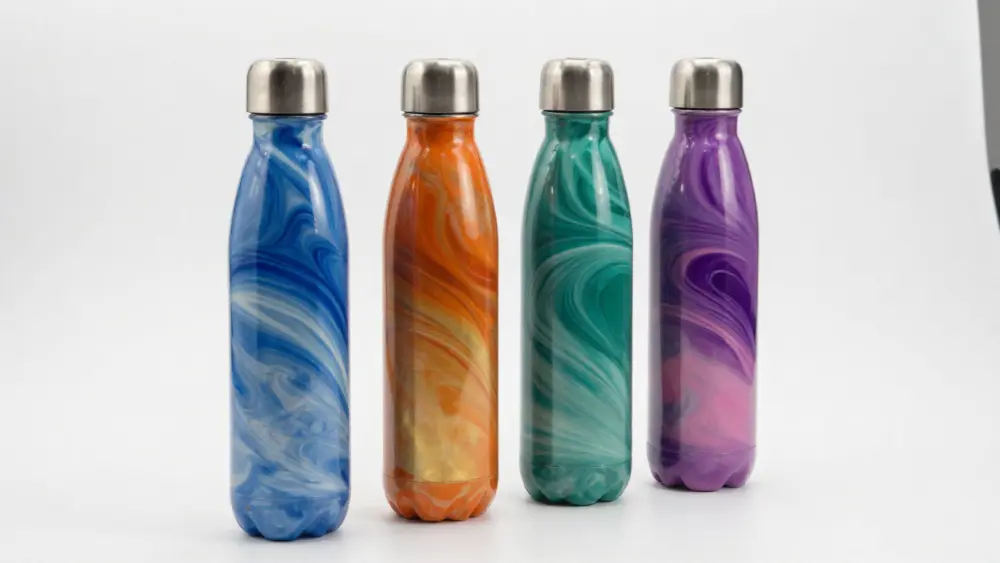
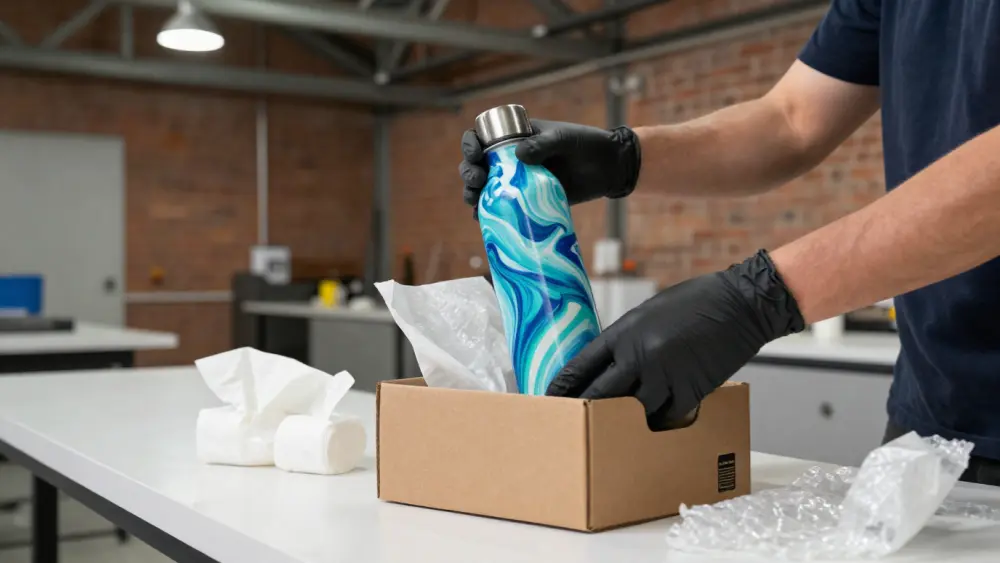
Hydrographic printing is a technique that allows objects to be decorated with logos, images, or graphics by transferring the design from a film to the product through water immersion. The process begins with the preparation of the item, which is cleaned to ensure proper adhesion of the decoration. A PVA (polyvinyl alcohol) hydrographic film is then used, onto which the design is printed. This film is designed to dissolve in water, leaving the artwork floating on the surface. A temperature-controlled water tank is prepared to accommodate the product. The film is placed on the water surface so it can float, and a chemical activator is sprayed over it. Its purpose is to dissolve the film support, leaving only the ink on the water. At this point, the item is immersed at a precise angle, allowing the design to adhere to the object. This method makes it possible to achieve decorations on irregular surfaces. After immersion, the product is removed and rinsed to eliminate film residues. Finally, a protective coating is applied to seal the design and ensure long-lasting durability. Hydrographic printing is used to decorate metal, plastic, and wooden items. It is appreciated for its ability to create detailed and long-lasting decorations.
Main Features
✅ Advantages
- High graphic quality with accurate details and faithful colors
- Unlimited number of colors, including gradients
- Excellent results on irregular shapes
- Glossy finish and professional appearance
- The protective coating increases durability and resistance
- Compatible with various materials: plastic, metal, wood, ceramic, and glass
❌ Disadvantages
- Longer production times compared to other techniques
- Complex process and less economical than standard printing
- Some surfaces may not guarantee optimal adhesion
- Requires specific equipment and trained personnel
Customization and Production Times
Hydrographic printing is a versatile technique suitable for different materials and products with irregular shapes. It allows decoration on plastic, metal, wood, glass, and ceramic. This printing method supports full-color production, gradients, and complex details, ensuring a uniform and visually impactful result. Due to the large number of steps involved, production times are longer compared to other technologies.
Colors and Materials
Hydrographic printing is applied to rigid materials and products with irregular shapes. This technology allows decoration on plastic, metal, wood, glass, and ceramic. It is therefore ideal for bottles, cups, mugs, flasks, thermoses, keychains, and many other uniquely shaped items. Graphics can be produced in full color, with gradients and complex details, ensuring a visually striking result.
Maximum Number of Colors
It is a full-color printing technique with no limits in graphic rendering. Gradients, small details, and complex designs are reproduced with precision, ensuring a sharp and uniform result.
Equipment and Support Materials
The materials and process involved in hydrographic printing are complex. This technique guarantees precise results but requires longer processing times compared to standard solutions. The procedure involves the use of tanks, water-soluble films, drying phases, and supports for positioning the graphics. It is therefore a less accessible option from an economic standpoint.
Printing Cost and Customization
Hydrographic printing is more expensive than standard printing techniques. Although less accessible economically, it offers superior resistance and very high photographic quality. Production speed is slow, with extended times required for both the process setup and drying phases.
Products Suitable for Hydrographic Printing
This high-quality and versatile printing technique is ideal for a wide range of products. Among the most popular are bottles, mugs, cups, flasks, thermoses, rigid keychains, and many other gadgets.
Warnings
Although hydrographic printing is versatile, resistant, and high-quality, some warnings apply. Not all materials are compatible with this technology. It requires controlled conditions, specific materials, and proper handling of supports. Warnings mainly concern alignment and long production times.